Do women get TMD more often than men?

Updated: Aug 14

Yes, women do appear to experience TMD more often than men. But that does not mean jaw pain is simply a “women’s problem”.
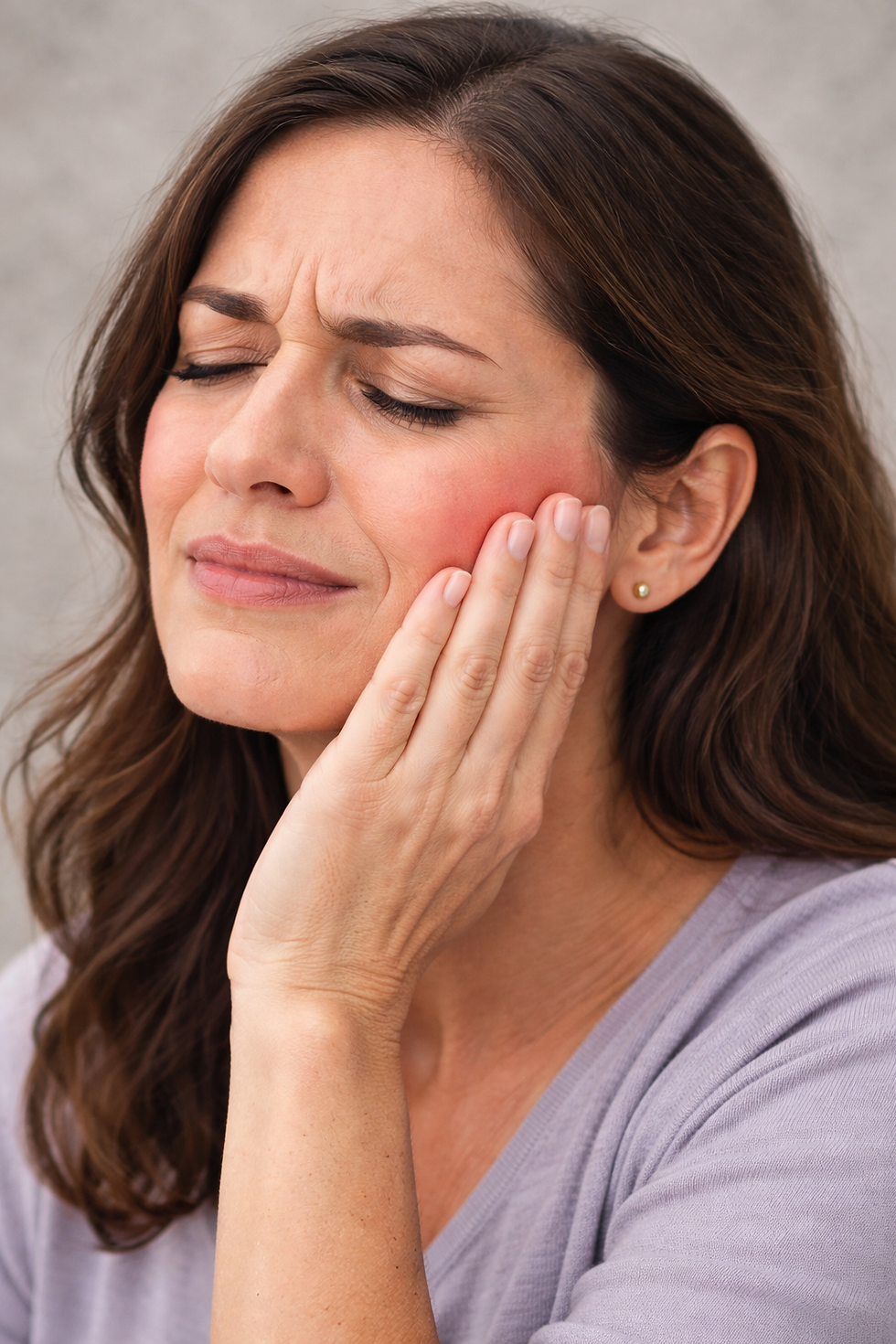
TMD stands for temporomandibular disorder. It refers to problems involving the temporomandibular joint, the chewing muscles, and the way the jaw moves. For some people, it shows up as aching around the jaw or ear. For others, it is painful clicking, locking, difficulty opening, headaches, facial tension, or pain with chewing, yawning or talking.
Research consistently shows that women are more commonly affected, especially during adult years. A 2025 systematic review and meta-analysis found TMD in 36.7% of female participants compared with 26.7% of male participants, using recognised diagnostic criteria across 27 studies. The same review also found that muscle pain and jaw clicking were among the most commonly reported features (Alqutaibi et al., 2025).
That difference is relevant, but it does not give us the whole story. The National Academies report on TMDs notes that prevalence estimates vary depending on how TMD is assessed, and that women appear to be at about twice the risk in some population studies. It also points out that persistent or chronic TMD may be where the sex difference becomes especially relevant (National Academies of Sciences, Engineering, and Medicine, 2020).
The reasons are not completely clear. Hormonal factors, pain sensitivity, stress, muscle tension, sleep, clenching habits and differences in how people seek care may all play a part. This is one reason we need to be careful with simple explanations. TMD is rarely caused by one thing alone. The jaw is influenced by the neck, the nervous system, breathing and sleep patterns, oral habits, dental factors, previous injury and the way a person’s body responds to pain.
The important clinical point is that symptoms matter more than sex.
An occasional painless click in the jaw is common and may not need treatment. Joint sounds and slight changes in jaw movement can occur in people who are not in pain. But persistent jaw pain, painful clicking, locking, difficulty opening, or pain with chewing, yawning or talking is different. Those symptoms need proper assessment, whether the person is male or female.
In clinical practice we often see people who have put up with jaw symptoms for months because they assumed it was stress, their bite, ageing, or something they simply had to live with. Sometimes stress is part of the picture. Sometimes the bite is relevant, but not often. Sometimes the neck, breathing, muscle guarding, clenching, sleep quality or pain sensitivity are bigger contributors than the person expected.
A physiotherapy assessment helps sort through those layers. At DentalPhysio in Buderim, the focus is not just on where the pain is felt, but on how the jaw actually behaves. Can it open comfortably? Does it shift to one side? Are the chewing muscles tender or overworked? Is the neck stiff? Does pain increase through the day? Is there clenching at night, jaw bracing while concentrating, or discomfort after longer conversations?
These details matter because two people with the same diagnosis can need quite different care. One person may need gentle work to reduce muscle guarding and improve jaw movement. Another may need help changing daily clenching habits. Someone else may need coordinated care with their dentist, especially when dental appliances, bite changes or tooth wear are involved.
So yes, women may be affected more often. But anyone can develop TMD, and persistent symptoms are worth understanding properly.
If your jaw pain, clicking, locking or chewing discomfort has been hanging around, you do not need to keep guessing.
DentalPhysio is located at Suite 2, 24–26 Gloucester Road, Buderim, QLD 4556. To book an appointment with Lorraine Carroll or Simon Coghlan, call 07 3532 8605 or visit www.dentalphysio.com.au.
By Lorraine Carroll
References
Alqutaibi, A. Y., Alhammadi, M. S., Hamadallah, H. H., Altarjami, A. A., Malosh, O. T., Aloufi, A. M., Alkahtani, L. M., Alharbi, F. S., Halboub, E., & Almashraqi, A. A. (2025). Global prevalence of temporomandibular disorders: A systematic review and meta-analysis. Journal of Oral & Facial Pain and Headache, 39(2), 48–65. https://doi.org/10.22514/jofph.2025.025
National Academies of Sciences, Engineering, and Medicine. (2020). Temporomandibular disorders: Priorities for research and care. National Academies Press. https://doi.org/10.17226/25652
Schiffman, E., Ohrbach, R., Truelove, E., Look, J., Anderson, G., Goulet, J. P., List, T., Svensson, P., Gonzalez, Y., Lobbezoo, F., Michelotti, A., Brooks, S. L., Ceusters, W., Drangsholt, M., Ettlin, D., Gaul, C., Goldberg, L. J., Haythornthwaite, J. A., Hollender, L., ... Dworkin, S. F. (2014). Diagnostic criteria for temporomandibular disorders (DC/TMD) for clinical and research applications. Journal of Oral & Facial Pain and Headache, 28(1), 6–27. https://doi.org/10.11607/jop.1151

Comments